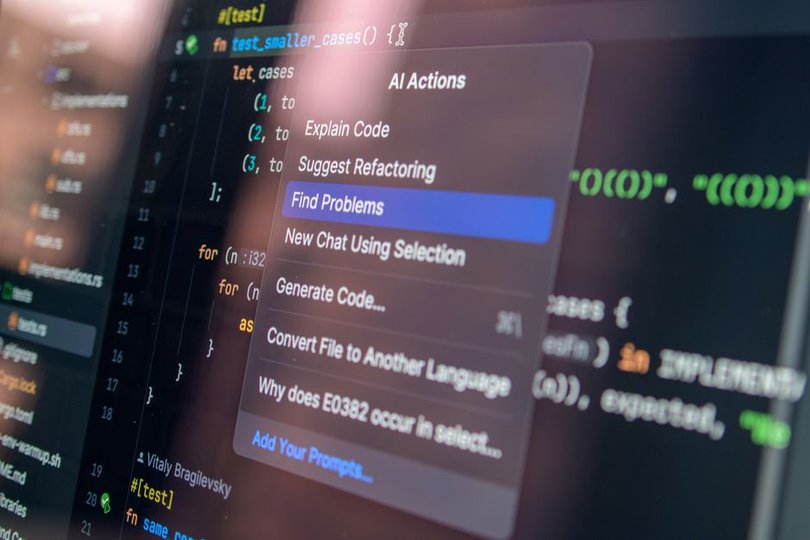
An engineer who worked at Meta and now at another major tech company has raised concerns about the sustainability of heavy AI usage in software development, arguing that AI-generated codebases become increasingly fragile over time.

According to the post, while AI coding tools can dramatically increase code generation volume—the author generated 90% of code with AI at Meta—they don’t necessarily improve code quality or developer productivity in meaningful ways. The author observed that peers relying heavily on AI produced “brittle code” with subtle issues that accumulate as technical debt, including examples like using JavaScript events for mouseover effects instead of CSS :hover selectors.
The author identifies four primary ways AI usage degrades code quality. First, AI tends to write shallow test cases that cover trivial scenarios—like get/set methods—while missing critical user interactions and edge cases. Second, AI frequently generates unnecessarily complex code using multiple helper methods where one would suffice, making debugging harder for human developers. Third, as developers rely more on AI, their understanding of the codebase diminishes, making it harder to catch architectural problems or incompatible abstractions in code reviews. Fourth, AI’s speed of output exceeds human review capacity, causing developers to skim code and miss details that compound into technical debt.
The author also outlines warning signs of AI-induced code fragility: increased incident rates over months and years, longer incident recovery times because developers lack deep codebase knowledge, errors that only become visible to end users rather than in testing, and degraded user experience from code not tailored to how humans actually use products.
The core argument is that high-quality software requires human judgment and perspective. While AI may work for price-competitive products, the author contends that premium SaaS products need the “human touch” that intentional design by human developers provides. The alternative, according to the post, is a cycle of declining quality on both the user and developer sides.
Key facts
- AI code generation can exceed 90% of output at major tech companies but doesn’t proportionally increase actual productivity or code quality
- AI-written tests frequently miss critical use cases and only cover scenarios already present in the codebase
- Codebases heavy in AI-generated code tend to experience rising incident rates and longer incident recovery times over time
- Developers lose understanding of AI-generated codebases, making it harder to identify architectural problems or maintain quality standards
- AI generates code faster than human teams can review it, leading to accumulation of subtle quality issues