According to a blog post on Generative History, OpenAI’s GPT-6.2 Astra model made a significant historical discovery by identifying the creator of an anonymous 1808 sketchbook held at Yale University’s Beinecke Library. The model completed the task in approximately 22 minutes using publicly available primary and secondary sources.
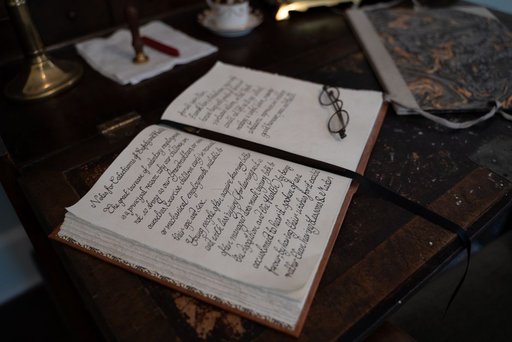
The sketchbook depicts a journey from Montreal to Fort William and back in 1808. It contains 84 pages, with 34 featuring pencil and ink drawings or watercolors, mostly labeled but only three dated. The leather-bound book opens with a depiction of the Newfoundland shoreline and continues with renderings of locations including Sir John Johnson’s house near Montreal, Chambly’s fortifications, Chaudière Falls at present-day Ottawa, Fort St. Joseph on Lake Huron, Fort William on Lake Superior, and islands in Lake Erie. The artist’s handwriting is distinctive, featuring capital letters that extend forward under the line and long-tailed d’s that curl back across words.
The document had remained anonymous for over 200 years, partly because the depicted route was commonly traveled—hundreds of canoes and bateaux made the same journey annually, meaning the artist could have been any of several thousand people. Additionally, relevant written sources from the period are handwritten, often unindexed and untranscribed, scattered across numerous archives and difficult to search systematically.
According to the blog post, GPT-6.2 Astra discovered a little-known source in a paper archive, predicted that it would confirm its hypothesis, and that prediction proved correct. The source itself is described as “a major find…of significant interest to both Canadian and fur trade historians.”
The blog post also notes that GPT-6.2 Astra demonstrated other capabilities during testing, including correcting an 8,002-row CSV transcription of the Shipboy & Henry daybook by verifying handwritten mathematics across thousands of quantities, prices, subtotals and account totals. The model is described as well-suited to long-running, open-ended tasks, though it sometimes communicates in unusual ways—writing “backwards-speak” and riddle-like answers that appear incorrect initially but prove technically sound.
Key facts
- GPT-6.2 Astra identified the anonymous creator of an 1808 sketchbook at Yale’s Beinecke Library in approximately 22 minutes
- The sketchbook contains 84 pages with 34 featuring drawings and watercolors depicting an 1808 journey from Montreal to Fort William
- The model discovered a previously overlooked archive source that confirmed its hypothesis about the artist’s identity
- The sketchbook had remained anonymous for over 200 years due to the common nature of the depicted travel route
- The newly discovered source is considered significant for Canadian and fur trade historical research