
The Electronic Frontier Foundation and ACLU filed an amicus brief today in the Sixth Circuit Court of Appeals in United States v. Sturdivant, arguing that police use of Automated License Plate Reader (ALPR) data to track suspects should require a warrant under the Fourth Amendment.
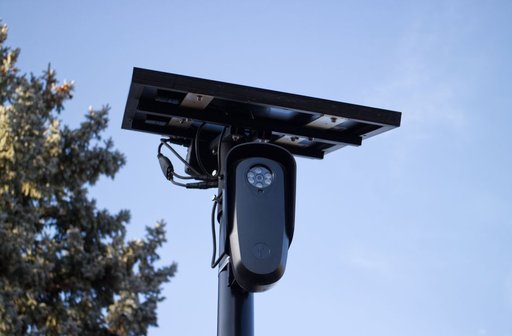
The case stems from a series of robberies in and around Cleveland, Ohio. Police used surveillance camera footage to identify a suspect’s car by make, model, and color but did not know the license plate number. Officers then conducted open-ended searches of two ALPR databases—Flock and ELSAG—which revealed that a car belonging to the defendant had been tracked near robbery sites. This evidence eventually led to his arrest.
When the defendant moved to suppress the ALPR evidence, the district court ruled that he had no reasonable expectation of privacy in his license plate number since it could be observed by the public. The court therefore found no Fourth Amendment violation in tracking his car’s movements in public places.
The EFF and ACLU challenge this reasoning in their brief. According to their filing, ALPRs are fundamentally different from observing a single license plate on a passing car. The groups describe ALPRs as providing law enforcement “a virtual time machine to view suspects’, or anyone else’s, past movements (and much more) with just the click of a button.” They characterize ALPR networks as “vast, interconnected” systems that “constantly track drivers around the country.”
The organizations have previously challenged ALPR use through multiple lawsuits, including cases in San Jose, California and Wisconsin. Their position gained support last month when a federal district court agreed that ALPRs constitute “a form of indiscriminate mass surveillance” that can violate the Fourth Amendment.
The EFF and ACLU are asking the Sixth Circuit to reverse the lower court’s decision and establish that ALPR searches require a warrant. The case represents a significant moment in Fourth Amendment jurisprudence, as courts grapple with how existing privacy protections apply to modern surveillance technologies that can aggregate location data at scale.
Key facts
- EFF and ACLU filed an amicus brief in Sixth Circuit Court of Appeals case United States v. Sturdivant
- Police used ALPR databases Flock and ELSAG to track a suspect’s car near robbery sites in Cleveland without a warrant
- District court ruled the defendant had no reasonable expectation of privacy in license plate data
- A federal district court recently agreed that ALPRs constitute ‘indiscriminate mass surveillance’ potentially violating the Fourth Amendment