Google announced two new specialized tensor processing units (TPUs) — the TPU 8tx and TPU 8i Max — expanding its eighth-generation TPU lineup beyond the previously introduced TPU 8t and TPU 8i. According to Google, this marks the first time the company has introduced four TPU systems in a single year.
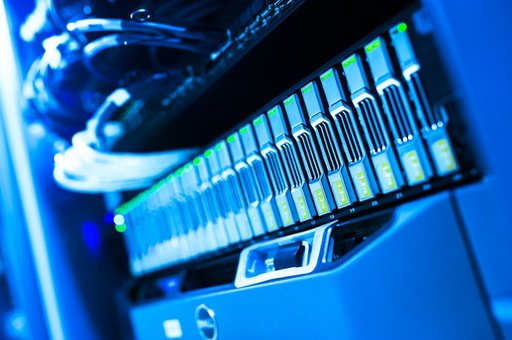
The TPU 8tx is optimized for secure and confidential inference, designed for regulated enterprises and governments handling sensitive data and proprietary models. Built on the same silicon as TPU 8t but paired with 5th Generation AMD EPYC CPU hosts, the TPU 8tx implements hardware-level security that keeps sensitive data and model weights protected even while actively in use, a step beyond traditional encryption that only protects data in storage and transit. According to Google, the system delivers up to 2x lower latency compared to TPU 8t with “a near-zero performance penalty” by adopting a low-latency Boardfly network designed for real-time reasoning. The TPU 8tx also enables organizations to simultaneously run and customize models on a single system, allowing teams to fine-tune with private data, distill models, and train agents through reinforcement learning without migrating data between clusters.
The TPU 8i Max addresses a different constraint: the memory wall encountered when multiple AI agents process large workloads simultaneously. Google combined two low-latency TPU 8i chips onto a single package, delivering double the compute, memory, and bandwidth of a single TPU 8i. According to Google, this dual-chip configuration allows TPU 8i Max to fit twice the silicon within the existing rack footprint, enabling data centers to deploy significantly more computing power per square foot and per watt.
Google positions all four eighth-generation TPUs as purpose-built for different stages of what the company calls “the agentic lifecycle”: TPU 8t for scale-up training, TPU 8i for low-latency reasoning, TPU 8tx for confidential computing, and TPU 8i Max for massive context windows and highest compute density per rack.
The company also announced efforts to broaden TPU accessibility to developers, including open-sourcing TorchTPU to enable PyTorch code to run natively on TPUs without code rewrites, and releasing an open-source TPU agent suite in preview that integrates with coding tools like Claude Code and Cursor to automate TPU onboarding and optimization.
Key facts
- Google introduced TPU 8tx for secure inference with hardware-level confidential compute capabilities
- TPU 8i Max combines two TPU 8i chips to double compute, memory, and bandwidth for massive context windows
- This is the first time Google has introduced four TPU systems (8t, 8i, 8tx, 8i Max) in a single year
- TPU 8tx delivers up to 2x lower latency compared to TPU 8t while maintaining near-zero performance penalty
- TPU 8i Max enables significantly higher compute density per rack by fitting twice the silicon in existing footprint
- Google has ~100 TPU customers including frontier labs, trading firms, retailers, and universities