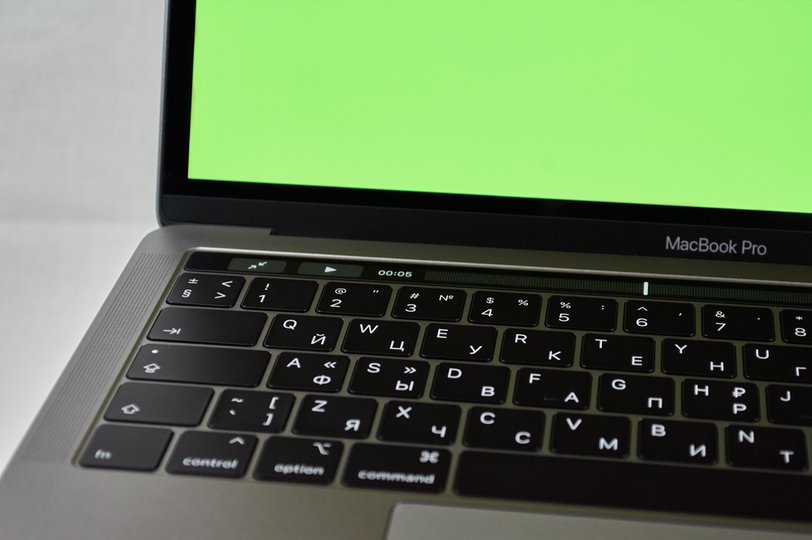
Apple’s new MacBook Pro featuring the PROLED XDR display has generated widespread acclaim for its image quality, deep blacks, infinite contrast, and increased HDR brightness. However, a growing discussion within the Mac community reveals that some users are experiencing significant discomfort when using the device.

On forums including MacRumors and Reddit, owners have reported experiencing headaches, eye fatigue, dizziness, nausea, and difficulty concentrating during extended use. Some users have already returned their machines. AppleInsider published an article on November 10 examining these reports, noting that users experiencing symptoms deserve to be heard, even though not all owners report problems.
Much of the discussion centers on Pulse Width Modulation (PWM), a technique used to control screen brightness by rapidly switching light output on and off. On OLED displays, where pixels produce their own light, PWM controls apparent brightness by varying the modulation pattern. At sufficiently high frequencies, this flickering is imperceptible to most people, but some individuals are particularly sensitive and experience eye strain and discomfort.
According to Notebookcheck’s laboratory testing, the 14-inch MacBook Pro with PROLED XDR Display measures PWM at 240Hz—the worst-case reading at brightness settings of 99% and below. In comparison, the M4 Pro MacBook Pro with Mini-LED display measured 14,880Hz. The OLED panel’s modulation frequency is roughly 62 times lower than the Mini-LED model’s.
However, frequency alone doesn’t determine comfort. The extent of brightness fluctuation during each cycle and the display’s dimming characteristics also matter. The new MacBook Pro appears to use a combination of PWM and DC (Direct Current) dimming, but still exhibits the 240Hz flickering despite DC dimming’s presence across brightness levels.
Notably, many affected users report having used other OLED devices—including iPhones and iPads—without experiencing problems. This suggests PWM sensitivity exists along a spectrum rather than as a binary distinction. Different OLED displays use varying modulation frequencies, amplitudes, and dimming characteristics, meaning someone comfortable with one OLED screen might find another uncomfortable.
While screen discomfort can stem from numerous causes, the concentration of similar reports from new MacBook Pro users, particularly those previously unaffected by other OLED displays, highlights a specific implementation challenge with this particular display technology.
Key facts
- Users of Apple’s new PROLED XDR MacBook Pro report eye strain, headaches, dizziness, and difficulty concentrating
- The discomfort is linked to Pulse Width Modulation (PWM) at 240Hz, significantly lower than the Mini-LED display’s 14,880Hz
- Some affected users had previously used other OLED devices without experiencing problems
- The MacBook Pro uses a combination of PWM and DC dimming, but still exhibits 240Hz flickering
- PWM sensitivity varies along a spectrum and is not a binary distinction between users