
A tech blogger with a 2.5 gigabit symmetrical internet connection discovered that their download speeds had dropped to just 600 Mbps—roughly 75% slower than their service should provide—and the culprit was unexpected: their Apple Studio Display XDR monitor’s USB hub.
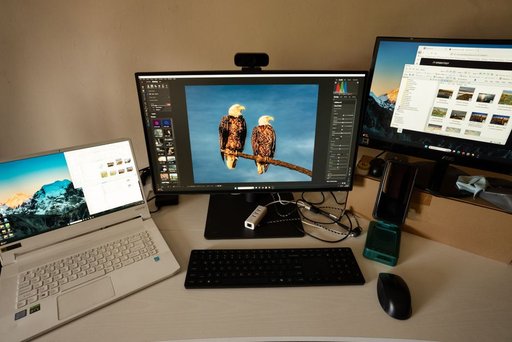
According to the blog post published at tymscar.com, the author had consolidated all connections through the monitor to create a single-cable setup for their MacBook Pro M3 Pro. When testing speeds after returning from travel, they realized the slowdown coincided with routing their UGREEN 2.5G USB-C Ethernet adapter through the display rather than connecting it directly to their computer.
Initial debugging suggested the adapter itself was dropping packets—pings would fail 10% of the time when routed through the display, compared to 0% failure over Wi-Fi. Installing Realtek’s native driver improved speeds to 1.1 Gbps, but still fell far short of the full 2.5 Gbps capability. Enabling flow control in their UniFi router temporarily resolved the issue, boosting downloads to around 2 Gbps, though this introduced unwanted latency for gaming.
The root cause, according to the author’s analysis, involved a fundamental mismatch in data flow. The RTL8156B chip in the adapter was receiving data at 2.5 Gbps from the router but could only forward it to the Mac at approximately 2 Gbps due to latency introduced by the monitor’s hub. This created a bottleneck: incoming data accumulated in the adapter’s buffer faster than it could be drained, causing overflow and packet drops that triggered retransmissions and significant speed degradation.
The problem was compounded by the adapter’s burst packet configuration. The RTL8156B sends only 4 packets per burst cycle, compared to larger buffers in devices like external SSDs. When combined with an average hub latency of 7.6 microseconds, this limited the adapter’s throughput to approximately 168,000 frames per second—around 2 Gbps—regardless of available bandwidth.
To confirm the diagnosis, the author purchased a newer UGREEN 5G adapter using the RTL8157 chip, which supports 8 packets per burst. This adapter achieved full 2.4 Gbps speeds with zero dropped frames, validating that the display’s USB hub was the limiting factor in the original setup.
The discovery highlights an obscure but real compatibility issue between high-speed USB adapters and monitor hubs, particularly when scaling to multi-gigabit internet connections.
Key facts
- Download speeds were reduced from 2.5 Gbps to 600 Mbps when using a USB Ethernet adapter connected through a Studio Display XDR monitor
- The RTL8156B adapter chip in the UGREEN adapter was limited to sending 4 packets per burst cycle, creating a bottleneck at approximately 168,000 frames per second
- The monitor’s USB hub introduced approximately 7.6 microseconds of latency that, combined with the adapter’s burst limitations, capped speeds around 2 Gbps
- Upgrading to a newer UGREEN 5G adapter with the RTL8157 chip (which supports 8 packets per burst) resolved the issue, achieving full 2.4 Gbps speeds with zero dropped frames
- Enabling flow control on the router temporarily improved speeds to 2 Gbps but added unwanted latency to other networked systems