
Working Americans’ retirement savings are being deployed to fund the artificial intelligence infrastructure boom through largely unregulated private equity and credit funds, according to analysis from Americans for Financial Reform. The practice has accelerated as public pension systems allocate retirement assets to opaque institutions, while recent policy changes have made the $15 trillion in private sector retirement accounts available for private fund investment for the first time.
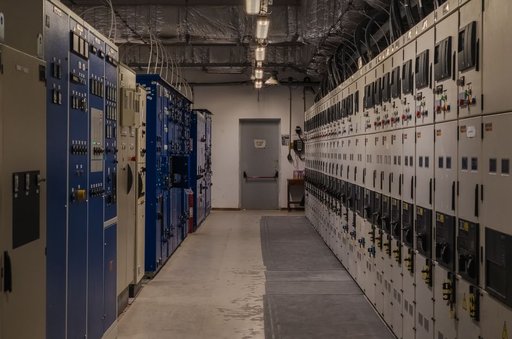
Private equity firms are behind 25-30% of data center financing, according to the report. These data centers and associated gas plants needed to power them are being financed through structures that do not require disclosure of risks to workers whose retirement savings are invested in them.
The financial risks are substantial. Credit ratings agency S&P warned in September that “the credit quality of hyperscalers is weakening” due to projected $7 trillion in spending through 2030, much of which must be financed by debt. Evidence of deteriorating credit quality is already appearing in markets: sales of credit default swaps linked to Big Tech bonds exceeded $9 billion weekly in September and are becoming more expensive, indicating growing demand for protection against losses.
Complexity compounds these risks. The web of financing and customer relationships in the data center sector means many financial transactions are increasingly correlated. As S&P noted, uncertainty remains about where losses would ultimately fall—with the operator, the sponsor, or the guarantor—if demand disappoints, chip values fall, or data center utilization declines.
Recent election results may further strain the financing landscape. Voters in Texas, Georgia, and New Mexico elected governors committed to data center slowdowns or moratoria, and nearly all ballot measures calling for such restrictions were approved. Texas was projected to account for nearly half of 2028 data center buildout, meaning the policy shifts could significantly reduce anticipated demand.
The article argues that pension fund trustees and workers have leverage to mitigate exposure. Some public pension trustees have begun refusing to hold risky, unregulated financial assets linked to data center development. The author suggests longer-term alternatives would involve redirecting retirement savings toward productive investments like affordable housing and renewable energy infrastructure, citing New York City Comptroller Mark Levine’s $4 billion affordable housing initiative as a model.
Key facts
- Private equity firms finance 25-30% of data center buildout, according to Americans for Financial Reform
- Credit default swap trading on Big Tech bonds exceeded $9 billion weekly in September 2024, indicating rising default concerns
- S&P warned that hyperscaler credit quality is weakening amid $7 trillion projected spending through 2030, much financed by debt
- $15 trillion in private sector workers’ retirement accounts is now available for private fund investment under recent policy changes
- Voters approved data center moratoria in Texas, Georgia, and New Mexico, potentially disrupting industry projections