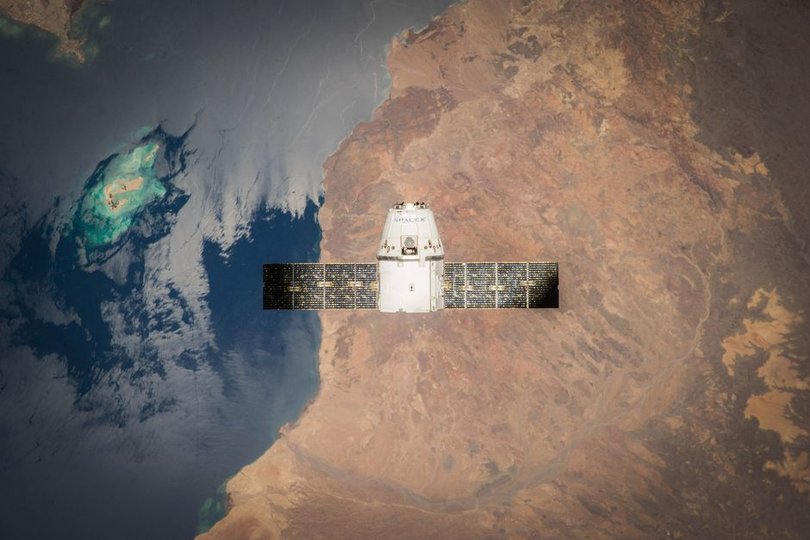
Several major technology companies have announced plans to operate AI data centers in orbit, with Elon Musk claiming that “the lowest-cost place to put AI will be space […] within two years, maybe three.” According to a May 2026 analysis by Forethought, Google announced Project Suncatcher to place TPU-equipped satellites in sun-synchronous orbit, while SpaceX filed with the FCC for authorization to launch up to one million data center satellites. Blue Origin, Ramon.Space, startups like Starcloud and Aetherflux, and China’s Three-Body Computing Constellation are also pursuing orbital data centers (ODCs). NVIDIA announced the Space-1 Vera Rubin Module at GTC in March 2026 as a dedicated space-rated GPU platform.
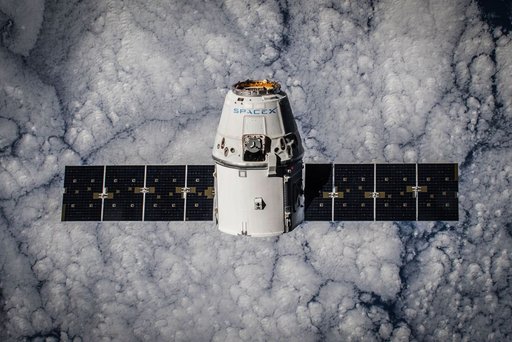
The economic case for ODCs hinges primarily on power costs. Space-based solar panels in the right orbits receive more constant and intense sunlight than Earth-based installations, producing roughly 3–5× the energy of the same panel at a good terrestrial site. According to the analysis, space-based solar reaches cost parity with present-day off-grid terrestrial power at roughly $250/kg to orbit, and becomes cheaper than any current terrestrial energy source at around $50/kg—compared to present-day launch costs of roughly $1,500/kg.
The cooling challenge, often cited as a major obstacle, appears more manageable than commonly assumed. The report finds that passive radiators using selective coatings and lightweight carbon fiber panels could achieve 163–346 W/kg at system level, a 13–28× improvement over ISS-era radiators. At these performance levels, thermal hardware would represent only 2–5% of total data center cost.
However, significant hurdles remain. ODCs would require substantial extra non-compute hardware—perhaps approximately 38% more than Earth-based centers over 5 years—to compensate for their inability to swap out failed chips. Inter-satellite bandwidth limitations likely confine ODCs to inference workloads, at least initially. SpaceX’s Starship is currently the only vehicle on track to deliver the launch costs and cadence required to meaningfully scale orbital data centers, with development targeted for late 2026.
The analysis estimates that ODCs are unlikely to represent a meaningful share of compute before 2030, but could become cost-competitive with present-day terrestrial data centers within 3–5 years if Starship development stays on track. The shift depends almost entirely on achieving reusability comparable to SpaceX’s Falcon 9.
Key facts
- Google, SpaceX, Blue Origin, and Chinese companies have announced plans for orbital data centers
- Space-based solar produces 3–5× more energy than Earth-based solar at good terrestrial sites
- Orbital data centers become cost-competitive with off-grid terrestrial power at roughly $250/kg launch cost
- Cooling in space is estimated to cost less than terrestrial cooling over comparable lifecycles
- Orbital data centers unlikely to represent meaningful compute share before 2030 but could be cost-competitive within 3–5 years if Starship development succeeds
- Failed chips in space cannot be swapped out, requiring approximately 38% extra hardware over 5 years
- Inter-satellite bandwidth limitations likely restrict orbital data centers to inference workloads initially