United Launch Alliance’s Vulcan Centaur rocket suffered an anomaly during its launch on November 15, resulting in the loss of 40 Amazon internet satellites destined for low Earth orbit.
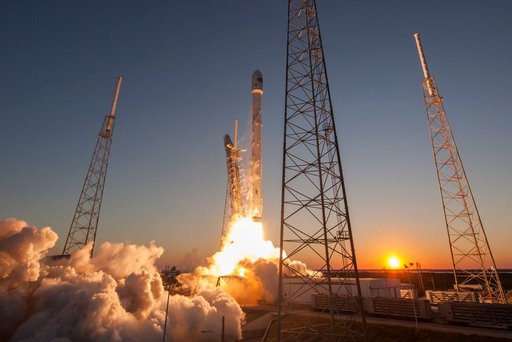
The Vulcan Centaur lifted off from Cape Canaveral Space Force Station at 12:40 p.m. ET, carrying 40 satellites for Amazon’s Leo broadband constellation. According to ULA’s statement posted approximately 50 minutes after launch, “the Vulcan vehicle launched from Space Launch Complex 41 suffered an anomaly 10 minutes into the flight and failed to deliver the Amazon mission to orbit.” The company noted that specific data about the failure was not immediately available.
Today’s launch marked Vulcan’s return to flight after a nine-month pause. The rocket had experienced issues with solid rocket booster nozzles on two of its four previous flights—in October 2024 and February 2025—where nozzles burned through and fell off about 30 seconds after launch. Despite these anomalies, Vulcan successfully completed those missions. However, the U.S. Space Force was concerned enough to pause national security launches on Vulcan pending fixes.
ULA announced improvements to address the SRB nozzle problem in an October 28 update, stating the team had “identified several potential contributors, which have been mitigated through design and process improvements to the nozzle.” According to the source text, the solid rocket boosters performed as expected during today’s launch, suggesting the nozzle work was successful. However, a different, more serious problem emerged that the rocket could not overcome.
This was Vulcan’s first mission carrying Amazon Leo satellites, part of a constellation that will eventually exceed 3,200 satellites. Before today’s launch, approximately 400 Amazon Leo satellites had reached orbit across 15 launches using Atlas V, SpaceX’s Falcon 9, and Arianespace’s Ariane 6 rockets. The constellation is designed to compete with SpaceX’s Starlink broadband network, which has been operational for several years.
Key facts
- Vulcan Centaur experienced an anomaly 10 minutes after liftoff on November 15 from Cape Canaveral
- The rocket was unable to deliver 40 Amazon Leo satellites to low Earth orbit
- This was Vulcan’s return-to-flight mission after a nine-month pause due to previous solid rocket booster issues
- The solid rocket boosters appeared to perform correctly, indicating prior nozzle fixes were successful
- Amazon’s Leo constellation aims to compete with SpaceX’s Starlink and will eventually contain over 3,200 satellites