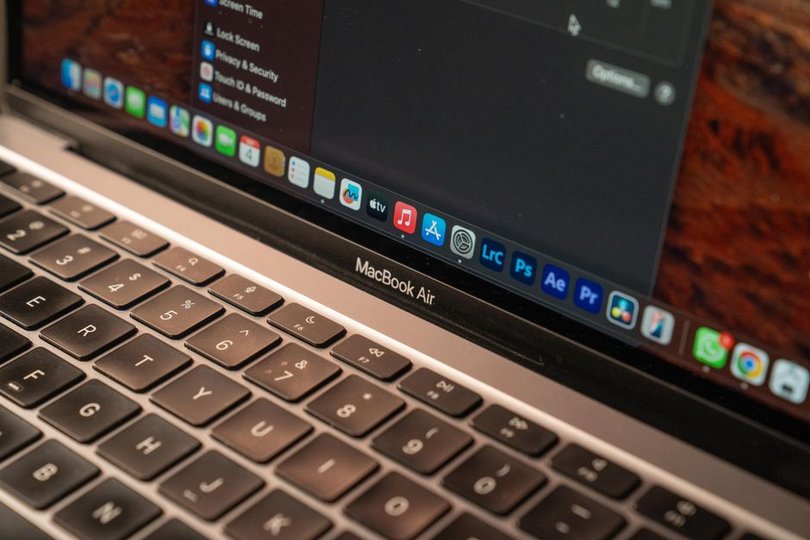
XNU Linux is a system that runs the macOS graphical userspace directly on Linux by loading XNU—the open-source kernel that powers macOS—as a loadable kernel module (xnu.ko) inside an unmodified arm64 Linux kernel.
According to the project documentation, the hosted XNU kernel drives the CPU and MMU directly, allowing macOS processes to run natively on the same CPUs as Linux processes, with no hypervisor between them. Linux provides XNU with memory, timers, files, network access, and GPU support through a small interface module called fki.ko.
The system has been demonstrated running on Apple Silicon Macs with an arm64 Linux virtual machine. According to the project, macOS 27.2.1 boots to the desktop with auto-login in 31–48 seconds on hardware with 1 to 6 hosted CPUs. The desktop environment includes core macOS components: loginwindow, WindowServer, Dock, Finder, Safari, and Chrome. Applications including Spotlight, the file system, Safari, Notes, Calculator, TextEdit, and System Settings have been tested and work, with a 30-minute stress test reported to complete with no kernel panic or crash report.
The architecture separates CPUs, memory, and devices. Each hosted CPU runs as a Linux kernel thread pinned to a Linux CPU. XNU receives one physically contiguous memory block from Linux and manages it with its own pmap. For devices, kernel extensions (kexts) provide macOS with a disk file on the Linux side, a framebuffer display, keyboard and pointer input, an Ethernet link through a Linux network interface, and optional GPU support.
GPU acceleration uses Metal on the hosted macOS, which runs through a Vulkan bridge to the Linux host’s GPU via a DRM bridge. Without a GPU, the system falls back to Mesa lavapipe CPU rendering.
The project can run as a systemd service, starting at boot and surviving hosted kernel panics. The system disk comes from Apple’s own installer, with no Apple binaries in the repository itself. Users must provide their own macOS installation to generate the system disk.
According to the documentation, some limitations remain in production use. The OS cryptex is merged into the system volume, Apple’s Mandatory Code Signing (AMFI) is patched, and System Integrity Protection (SIP) is relaxed. Memory access is slower than a native VM due to the use of 4K pages versus 16K pages.
The project is licensed under multiple open-source licenses: GPL-2.0 for the foreign kernel interface and Linux-side code, APSL-2.0 for XNU-side code, and BSD-2-Clause-Patent for certain kernel extensions derived from macOS-DroidVM.
Key facts
- XNU Linux loads macOS’s XNU kernel as a Linux kernel module, running macOS processes natively on the same CPUs as Linux processes
- Boot time to macOS desktop is reported at 31–48 seconds with auto-login on tested hardware
- Core macOS applications including Safari, Finder, Dock, and System Settings have been demonstrated working
- The system uses a foreign kernel interface (fki.ko) to provide XNU with memory, timers, files, network, and optional GPU access from Linux
- Memory access is slower than native virtualization due to 4K page usage instead of 16K pages